


This Tetouan medina guide introduces the most Andalusian city in Morocco. Tetouan, about an hour from Tangier, was rebuilt at the end of the fifteenth century by refugees from Granada, and its white old town, a UNESCO World Heritage Site since 1997, still keeps their houses, fountains and crafts. It is calm, authentic and far less crowded than the better-known medinas.
In this Tetouan medina guide you will find the history in a few lines, the places worth seeing, the traditional crafts, the sweets to taste and a simple plan to visit from Tangier. It is written by a local team that runs day trips to the city every week, and it connects with our guides to places to visit near Tangier and a northern Morocco itinerary.
Contents
Tetouan medina guide at a glance
Tetouan Morocco is easy to visit because the medina is compact and well kept. Here are the essentials.
| Question | Answer |
|---|---|
| Where is it? | About 60 km south-east of Tangier, in the Martil valley |
| Drive from Tangier | About one hour by road |
| UNESCO listing | The medina has been a World Heritage Site since 1997 |
| Known as | Granada’s Daughter and the White Dove |
| Time needed | Half a day for the medina, a full day with crafts and lunch |
| Best for | Architecture, crafts, sweets and quiet alleys |
You can read the official listing on the UNESCO World Heritage page and more about the city on Wikipedia.
Andalusian Tetouan: the story of Granada’s daughter
The site was settled for centuries, and the Marinids built a kasbah here in the late thirteenth century. The modern city begins at the end of the fifteenth century, when Ali al-Mandri, a captain from the Nasrid kingdom of Granada, rebuilt the ruined town with Muslim and Jewish refugees from Andalusia. They filled the walled enclosure with houses and gave Tetouan its nickname, Granada’s Daughter.
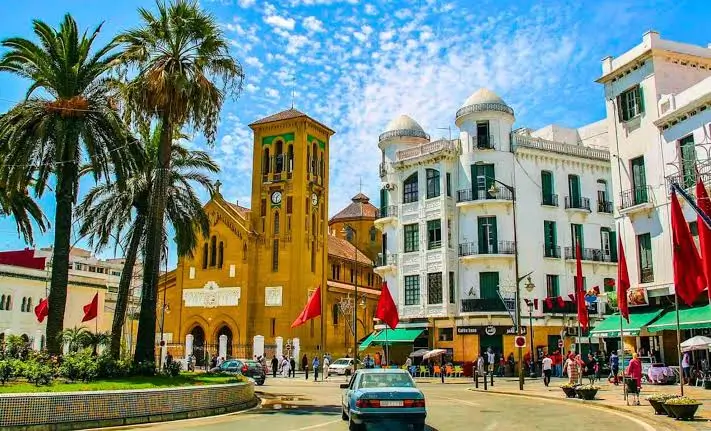
In 1913 Tetouan became the capital of the Spanish protectorate in northern Morocco, which lasted until 1956. This is why Spanish is still understood in the city, and why the Spanish-era new town stands beside the old medina. Today Tetouan is also a UNESCO Creative City for crafts and folk art.
Tetouan medina guide: a walk in seven stops
If you only have a morning, follow this simple route. It starts at the gate and ends in a garden, and it covers the main sights of Tetouan Morocco.
- Bab Okla: start at the gate and the busy square outside it.
- The main lanes: follow the shopping lanes into the heart of the medina.
- The craft quarters: zellige, pottery, plaster, embroidery, silver inlay and slippers each have their own area.
- The tiled fountains: look for the horseshoe arches and the blue plaques.
- The Royal Palace square: a public square beside one of the entrances to the medina.
- The Archaeological Museum: about a hundred metres from the Royal Palace, built in 1943.
- Riad Al Ochak: finish with a rest in the Moorish-style garden at the foot of the hills.
Tetouan medina guide: gates, lanes and fountains
Bab Okla, the gate
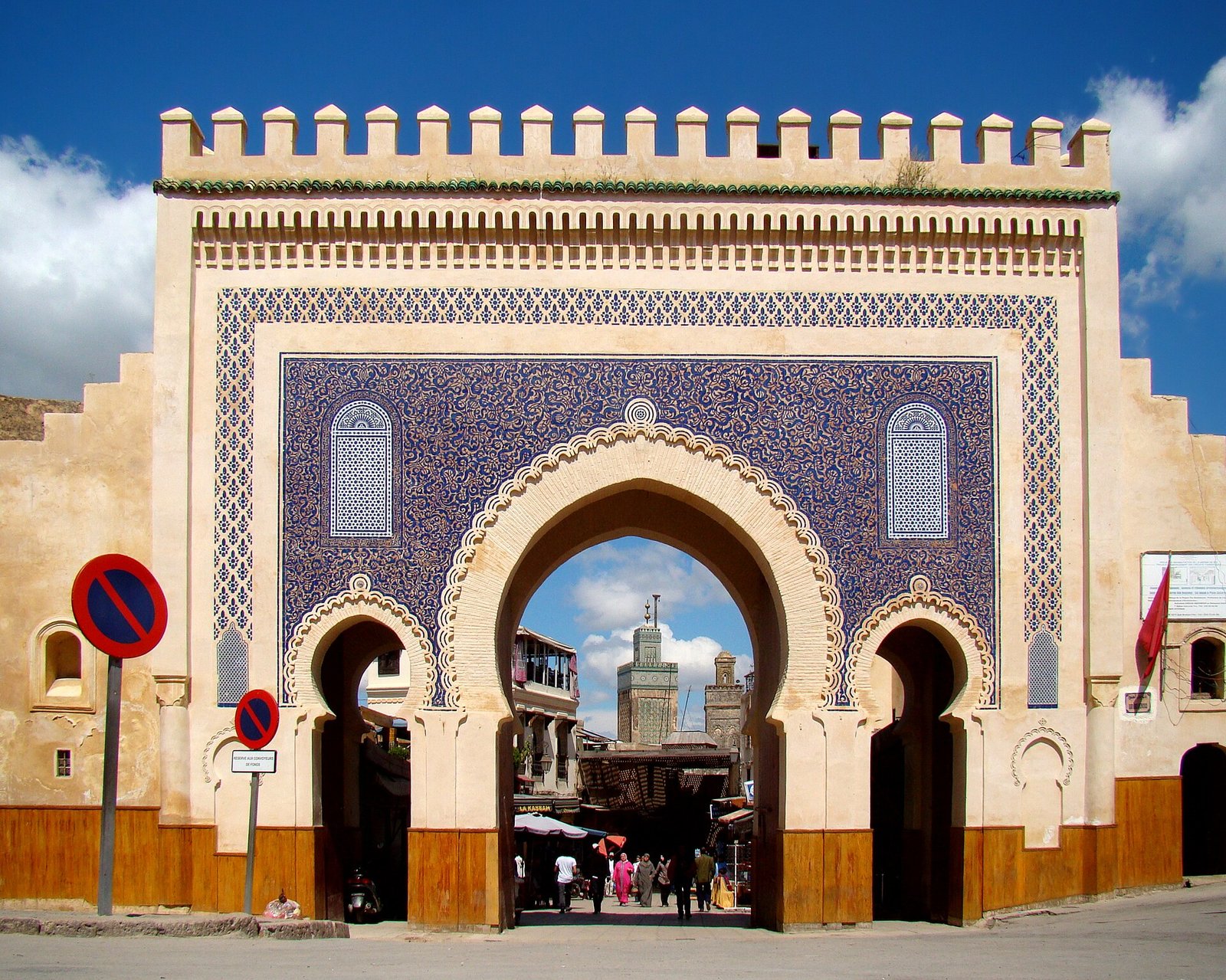
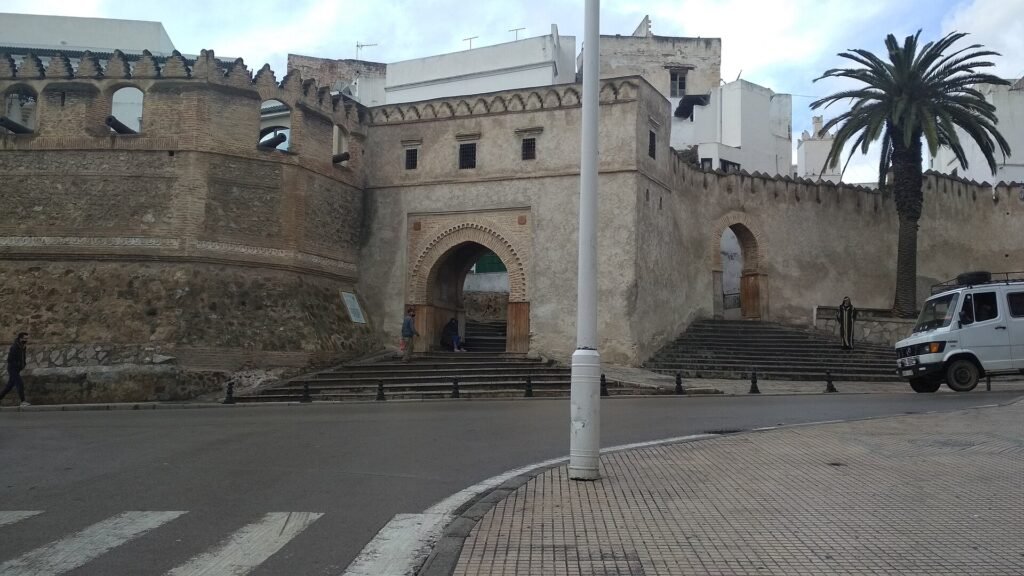
Many visitors enter through Bab Okla, a monumental gate with a staircase and an arch, near a lively square where traders sell vegetables and poultry. Pause here to watch daily life before you step into the lanes.
The white lanes
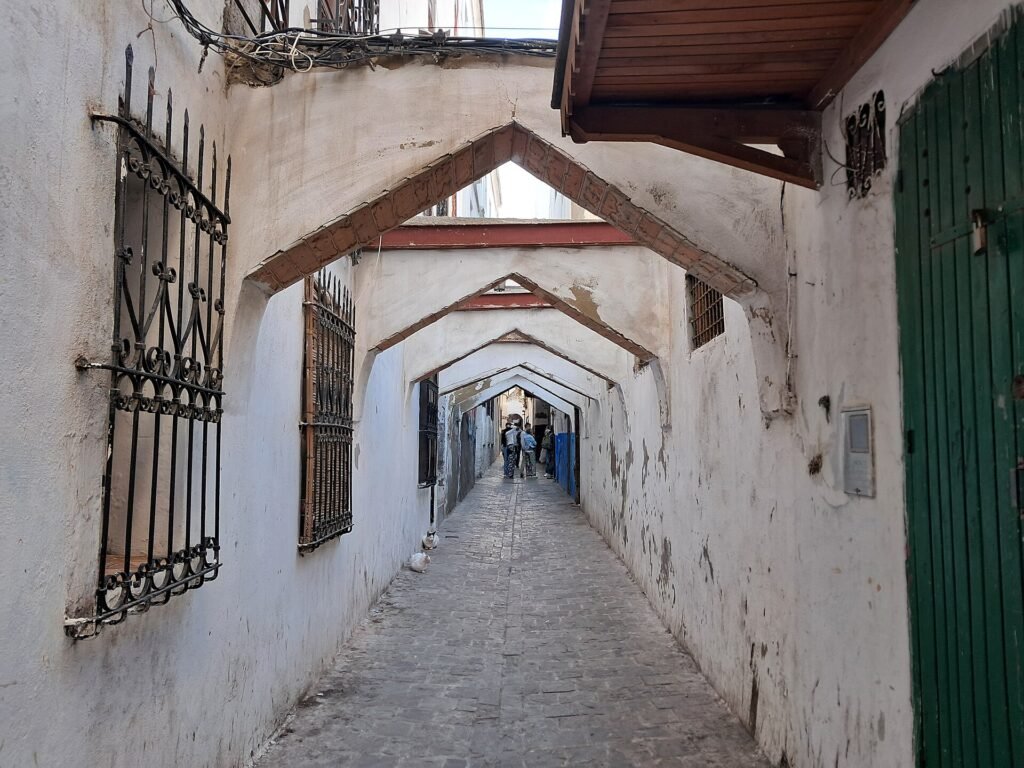
Inside, the Tetouan medina is a maze of whitewashed lanes, covered passages and small squares. Do not worry about getting lost: the medina is small, and the lanes lead back to a gate sooner or later. Look up for carved doors and wrought-iron windows.
Tiled fountains
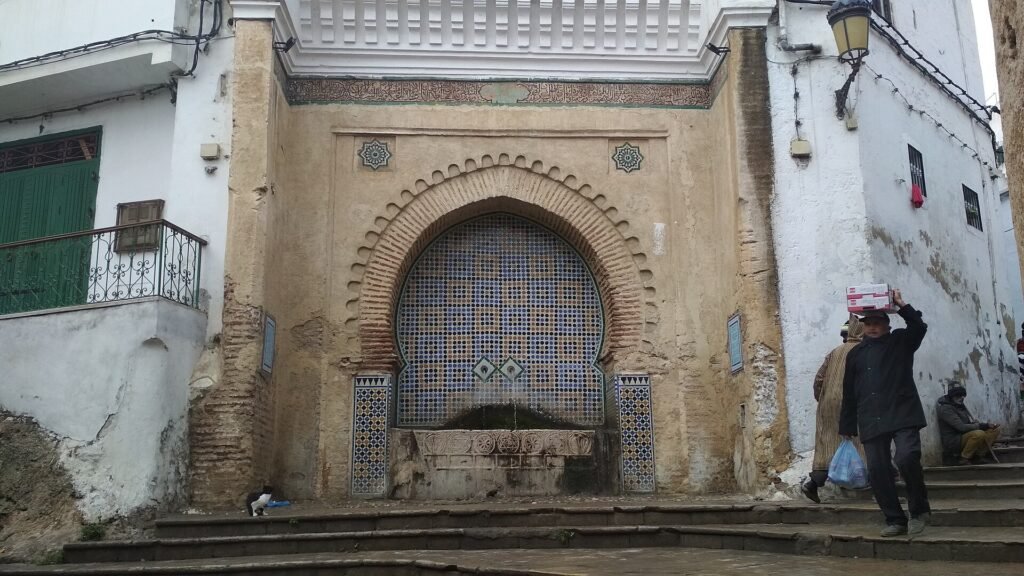
Fountains decorated with zellige tiles stand at corners and gates, and each has its own pattern. They are a good reminder that water was once a public gift in the medina. Stop to look at the horseshoe arch and the blue plaques that explain them.
Tetouan crafts: zellige, plaster, embroidery and slippers
Tetouan crafts are concentrated in the old medina, where every trade has its own quarter and sometimes its own street name. Traditional work includes zellige tilework, pottery, carved plaster, embroidery, inlay with silver wire and the thick-soled yellow slippers worn in the mountains. The city is known for the quality of its work, and in 2017 it joined the UNESCO Creative Cities Network for crafts and folk art.
This Tetouan medina guide recommends that you see craftsmen at work and buy directly from them. Ask the price before you start, and read our tips on what to buy in Morocco before you shop.
What to eat in Tetouan: Andalusian flavours and sweets
The food of Tetouan mixes Arab, Berber, Andalusian, Turkish and Spanish influences. You will find couscous and rfissa, which are Moroccan staples, and a famous tradition of sweets such as qatayef and baklava, a legacy of Ottoman contact. Try them with mint tea in a café, and compare them with what is described in our guide to what to eat in Tangier.
Museums and gardens in Tetouan, Morocco
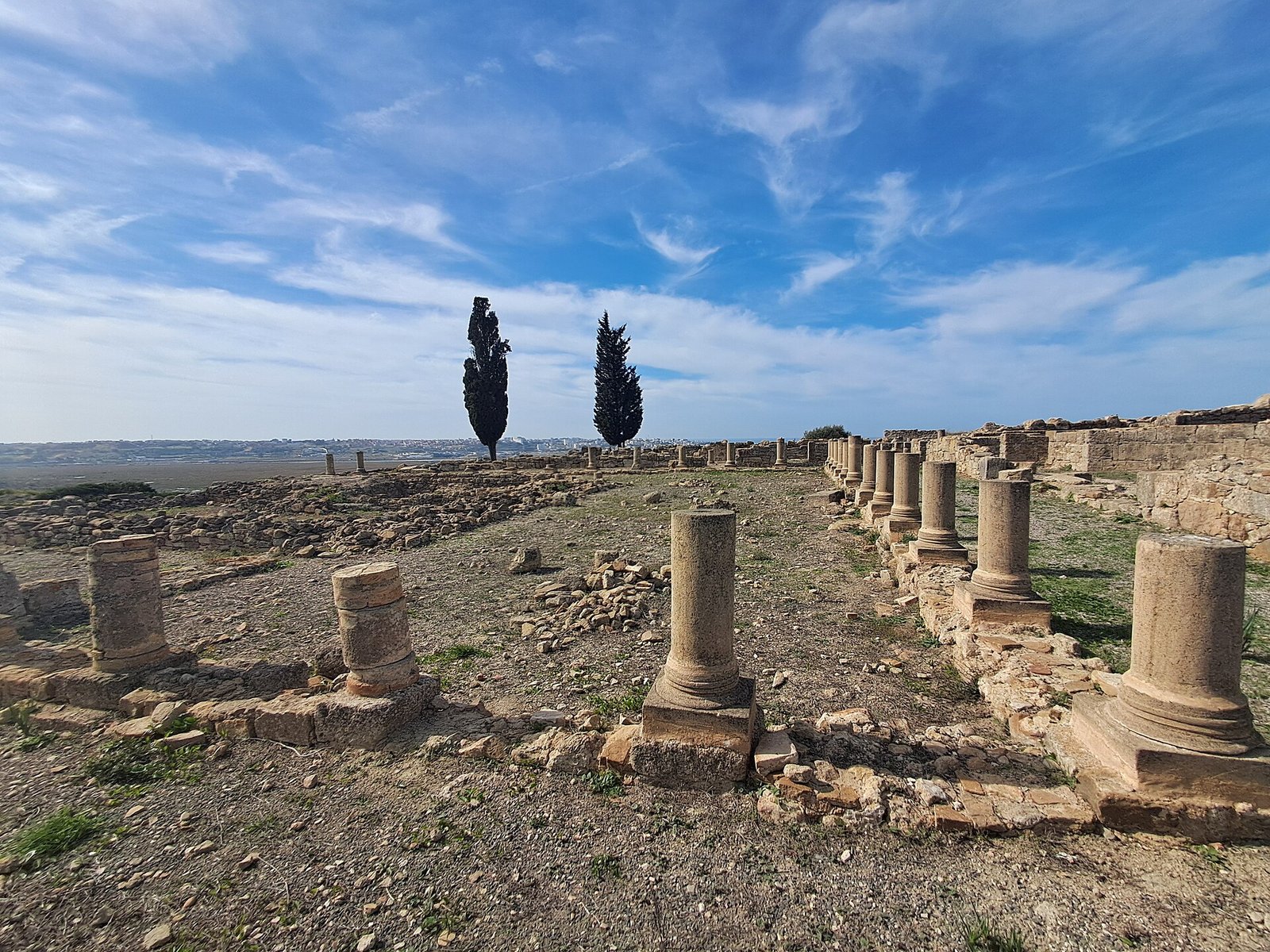
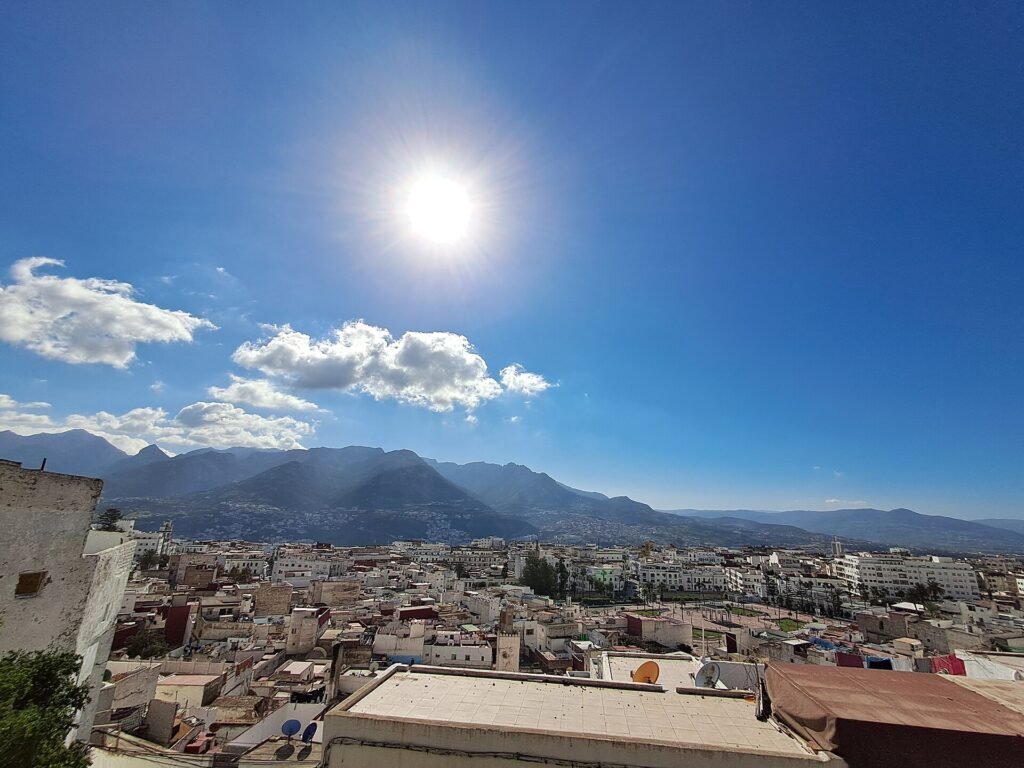
The Spanish era left its mark on the city, and Tetouan has a good archaeological museum, built in 1943 near the Royal Palace, that shows objects from the Phoenician, Roman, Jewish and Arab periods. There is also a museum of modern art, and a Moorish-style public garden, Riad Al Ochak, which is pleasant on a hot afternoon. From the hills above the old town, you can look over the city and the mountains.
How to visit Tetouan Morocco from Tangier
Tetouan is about an hour from Tangier by road, and it is a good partner for Chefchaouen on the way to the mountains. A morning is enough for the medina, and a full day lets you add crafts and lunch. You can go with a guide, who explains the history and the trades, or by taxi or bus.
Trips that fit this
- Tetouan Day Trip from Tangier includes the medina, the crafts and the markets with a driver-guide.
- Chefchaouen & Tetouan Day Trip combines the Andalusian city and the blue town in one day.
- Tangier to Tetouan Transfer is a direct private transfer, if you want to continue your trip.
The page about Tetouan tours lists more trips.
Tips from the Tetouan medina guide
- Go in the morning, when the lanes are cool and the workshops are open.
- Wear flat, comfortable shoes for the stones and stairs.
- Ask before taking photographs of craftsmen, and thank them.
- Respect prayer times and the dress codes explained in our guide to Moroccan culture and etiquette.
- Carry small change for tea, snacks and tips.
Frequently asked questions about the Tetouan medina guide
Is Tetouan worth visiting?
Yes. It has a UNESCO-listed Andalusian medina, living crafts and a calm atmosphere, and it is an easy day trip from Tangier.
Where does a Tetouan medina guide start?
Most visits start at Bab Okla, a monumental gate with a staircase, and then follow the main lanes towards the craft quarters.
How far is Tetouan from Tangier?
About 60 kilometres, roughly one hour by road.
Why is Tetouan called Granada’s daughter?
Because the city was rebuilt at the end of the fifteenth century by refugees from Granada, who brought their architecture and customs.
How long do I need in the Tetouan medina?
Half a day for the main sights, and a full day if you add crafts and a long lunch.
Can I combine Tetouan and Chefchaouen in one day?
Yes. Tetouan is on the way, and the combined day trip is a classic. Start early to enjoy both.
What should I buy in Tetouan?
Zellige, ceramics, embroidery, leather slippers and sweets. Ask who made the piece and where.
A good Tetouan medina guide is short because the city is calm: arrive early, enter by Bab Okla, follow the lanes and stop for tea and sweets. You will leave with the feeling of having seen a piece of Andalusia on the African side of the Strait.
Visit Tetouan with a local guide
Our Tetouan day trip from Tangier covers the medina, the crafts and the markets with a driver-guide.
Photos: Oumaima Achoua / Wikimedia Commons, CC BY-SA 4.0 · Ideophagous / Wikimedia Commons, CC BY-SA 4.0 · Oumaima Achoua / Wikimedia Commons, CC BY-SA 4.0 · Ideophagous / Wikimedia Commons, CC BY-SA 4.0