


What to buy in Morocco is a happy problem: leather, wool, brass, clay, spices and silver, all made by hand and sold in markets that are a pleasure to walk. The difficulty is choosing quality over quantity, and knowing the fair price. This guide lists twelve souvenirs worth bringing home, explains what to buy in northern Morocco in particular, and shows how to bargain without stress.
It is written by a Tangier-based team that takes visitors to the medinas every week, so it knows what to buy in Morocco and what to leave on the shelf. We include notes on prices, on how to tell handmade from factory work, on what to avoid and on how to pack. If you are new to the culture of the souk, start with our guide to Moroccan culture and etiquette, and then enjoy the shopping.
Contents
What to buy in Morocco: the 12 best souvenirs
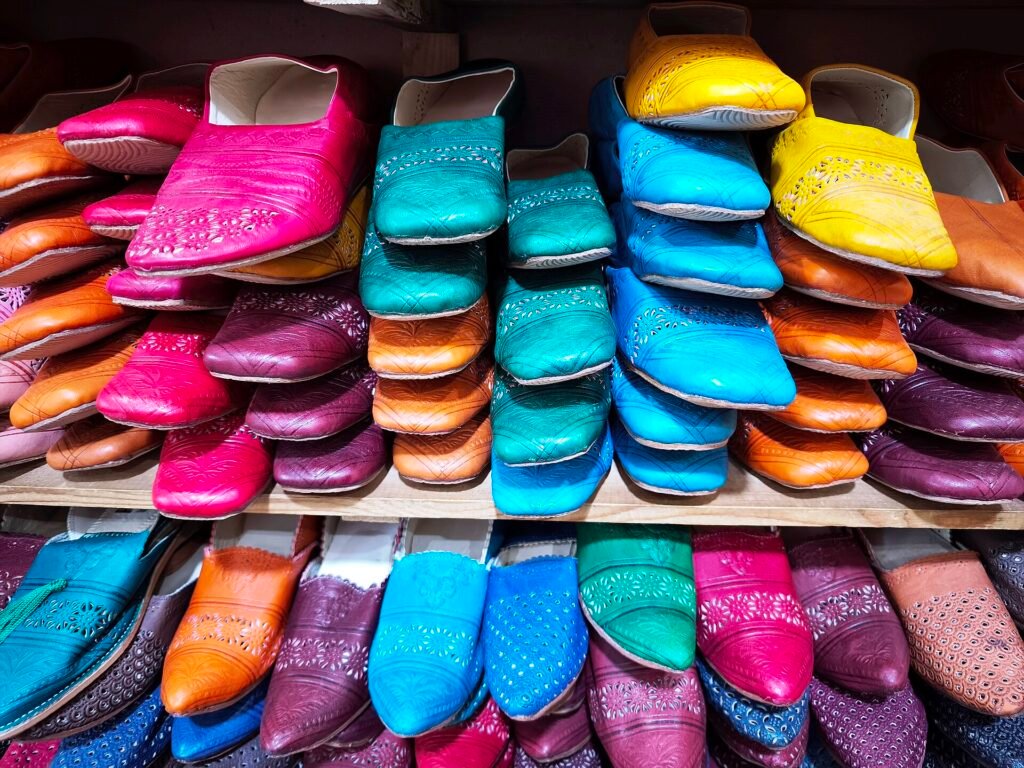
1. Babouches
The soft leather slippers called babouches are the classic purchase: comfortable, colourful and cheap. Choose real leather, check the stitching and try them on, as sizes vary.
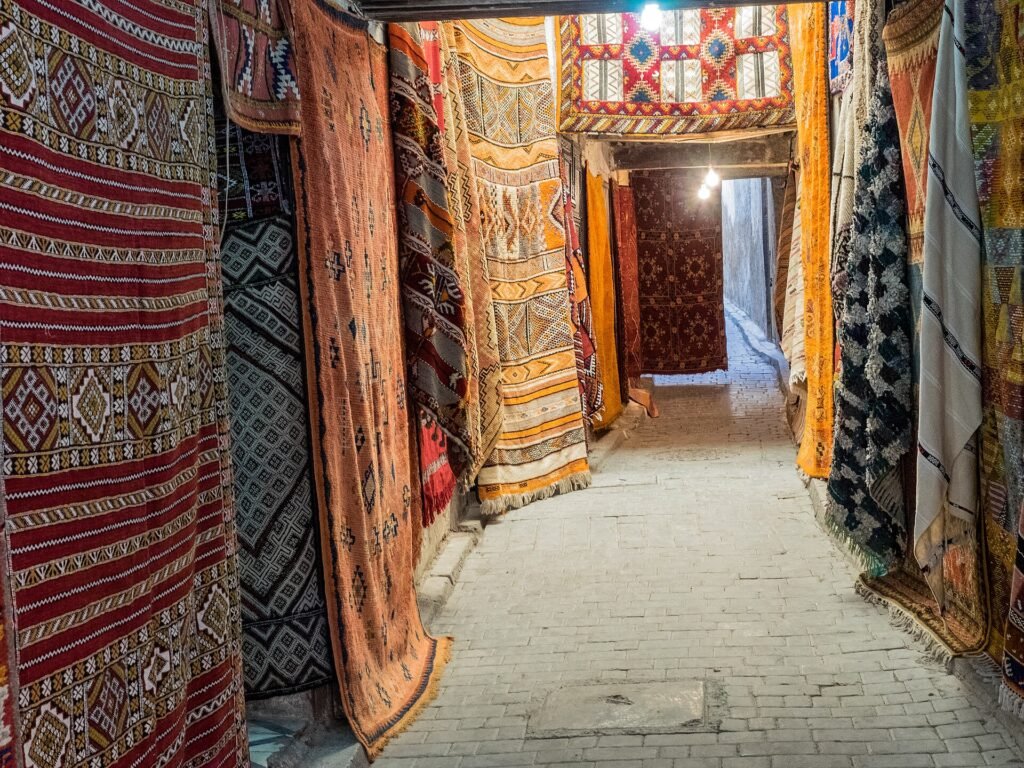
2. Rugs and blankets
When you wonder what to buy in Morocco for your home, a rug is the first answer. Handwoven wool rugs and blankets vary by region. Look at the weave, feel the wool and ask about the dye. Real Berber rugs show small irregularities; a perfect, machine-like pattern suggests a factory.
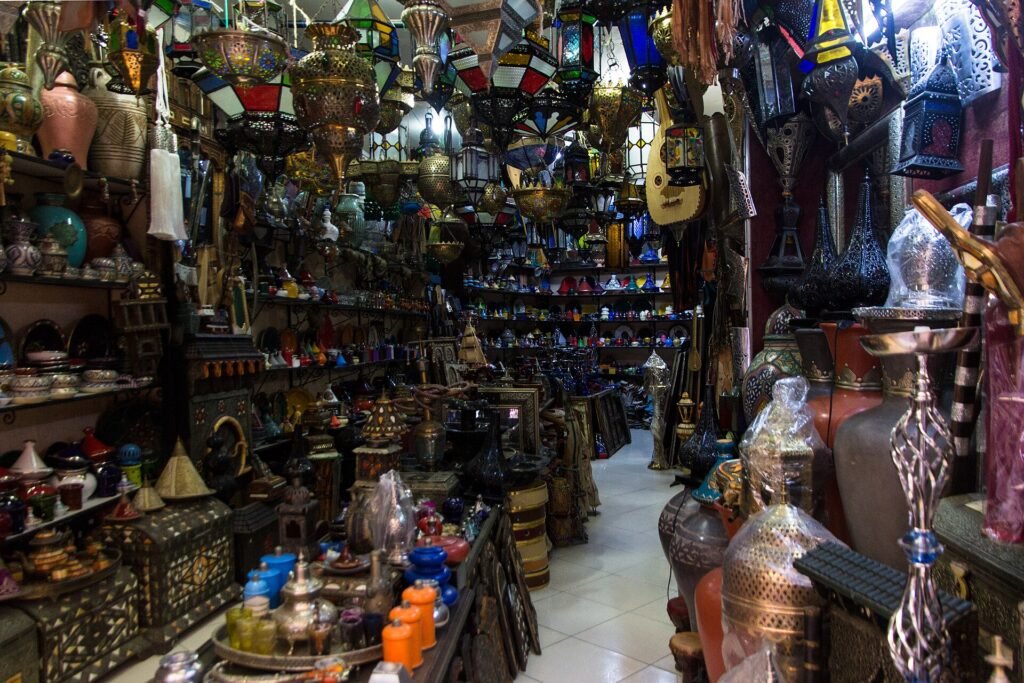
3. Lamps and lanterns
Brass and coloured glass lanterns turn a room into a Moroccan evening. Pick pieces with clean joints and test the fitting for your own bulbs and plugs before you pay.
4. Ceramics and zellige
Painted plates, bowls and tiles in zellige patterns make good gifts. Heavy pieces are best bought on the last day, with a plan to ship them if they are very large.
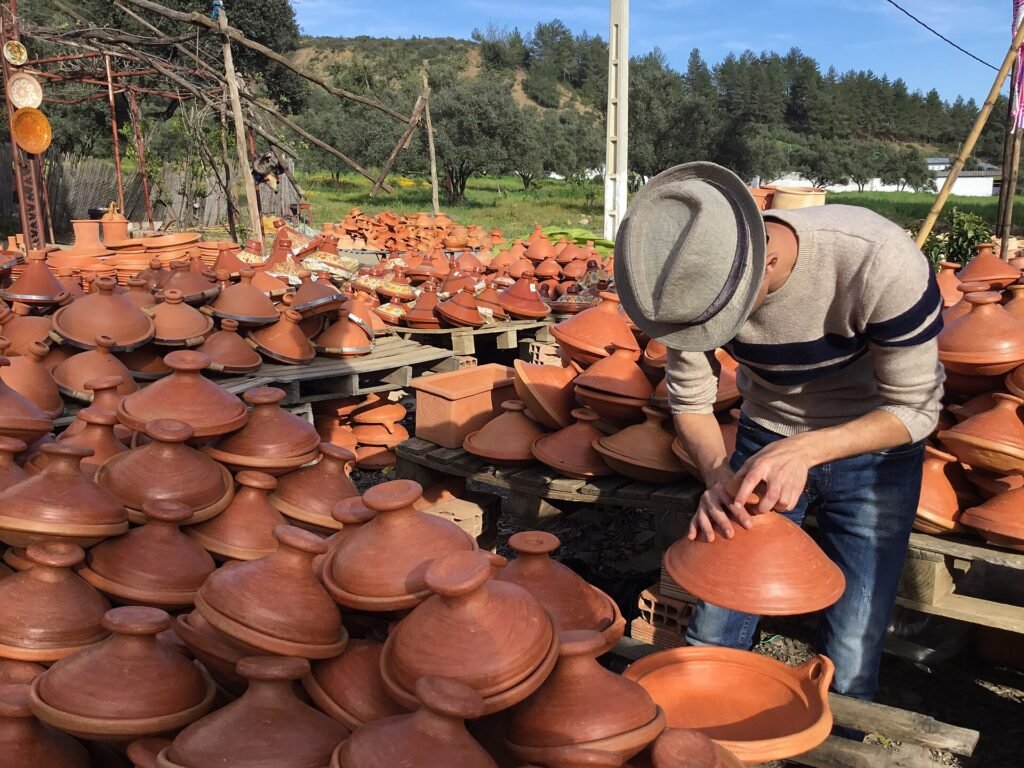
5. Tagines
A tagine pot is both a souvenir and a tool. Ask whether it is for cooking or only for decoration, because many painted pots are not food-safe. Unglazed or simple glazed pots from a potter are best for the kitchen, and the Wikipedia page on tagine explains how to use them.
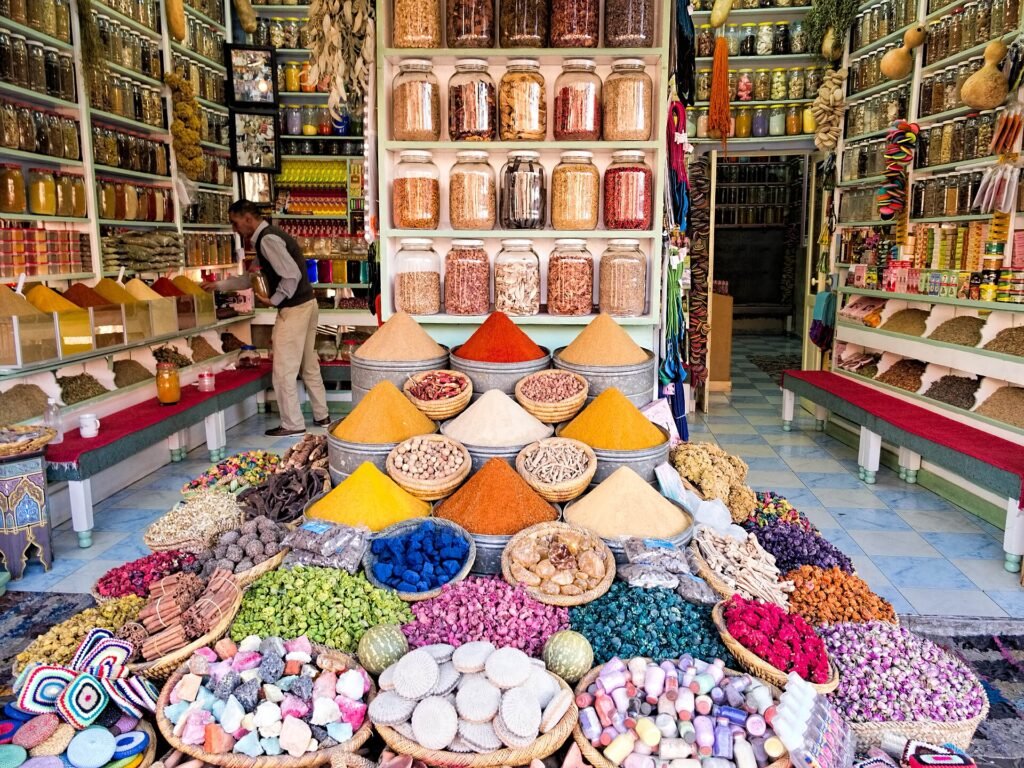
6. Spices and ras el hanout
For a cook, spices are the easiest answer to what to buy in Morocco. Cumin, paprika, saffron and the mixed blend called ras el hanout are light and easy to carry. Buy small quantities from a busy stall, smell before you buy and keep them sealed at home.
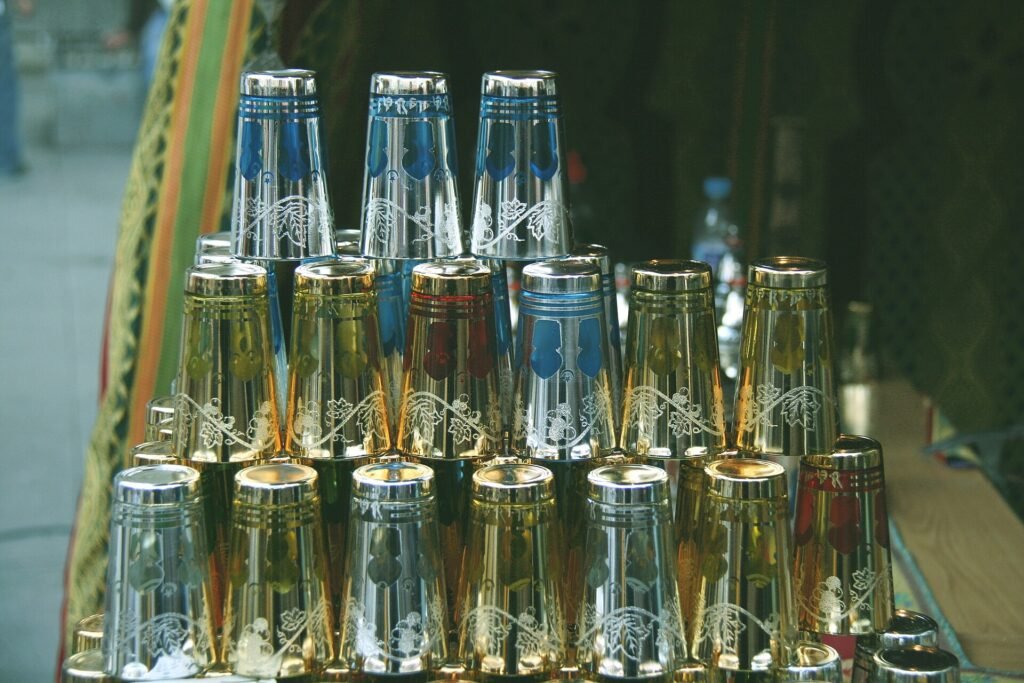
7. Tea glasses and teapots
A set of decorated tea glasses and a metal teapot lets you recreate Moroccan tea at home. Choose a sturdy teapot with a long spout and test that the lid closes.
8. Argan oil and cosmetics
Real argan oil comes from the south-west of Morocco and is sold in women’s cooperatives. A pure oil has a light colour, a nutty smell and a clear label. Be wary of very cheap bottles.
9. Silver jewellery
Berber jewellery is bold and symbolic. Ask whether it is silver or silver-plated, and check the hallmark.
10. Kaftans and djellabas
A kaftan or a djellaba is comfortable and elegant. Look for natural fabrics and fine embroidery.
11. Leather bags and poufs
Leather goods are plentiful. Smell the leather, check the seams and the zips, and buy unstuffed poufs, which are easy to pack and can be filled at home.
12. Sweets, dates and tea
Dates, almonds, nougat and loose mint tea are lightweight gifts. Buy in sealed packs for the journey home, and avoid fresh meat or dairy products.
Moroccan crafts explained: how to spot handmade quality
Moroccan crafts are made in family workshops, and the best pieces carry small signs of the hand. Moroccan souvenirs made in factories look perfect and feel light, while handmade ones have slight differences in colour and shape.
- Leather: smell it (real leather has a natural smell), check that the edges are cut cleanly and the stitching is even.
- Wool: rub it, because real wool is warm and slightly oily, and synthetic fibres feel cold and smooth.
- Metal: lift it, as brass is heavy and plated metal is light and may show a different colour at the edges.
- Clay: tap it and listen for a clear note, since cracks give a dull sound.
- Wood: look for cedar or thuya, which have a rich smell, and check the joints.
Ask who made the piece and where. Honest sellers will tell you, and a story is part of the souvenir.
What to buy in Morocco on a budget, and what is worth paying for
You do not need a big budget to bring home something meaningful. For small money, choose babouches, spices, soap, tea glasses and sweets. Worth paying more for are a handwoven rug, a quality lamp, ceramics from a known workshop and pure argan oil from a cooperative.
A simple rule helps: spend where the craft is hardest to copy. A well-made rug lasts decades, while a cheap copy of a lantern will not.
What to buy in Morocco as gifts: ideas for every person
- For a cook: a tagine, a pot of saffron, ras el hanout and a small spice grinder.
- For a tea lover: decorated glasses, a teapot and a pack of loose green tea with mint.
- For a home lover: a lantern, a cushion cover or a wool blanket.
- For a friend who loves fashion: babouches, a kaftan or a leather bag.
- For anyone: dates, almonds and a small bottle of argan oil.
What to buy in northern Morocco: Chefchaouen, Tetouan and Tangier
Each northern city has its specialities. In Chefchaouen, look for woven wool blankets, handmade soap and local honey. Tetouan is known for its craft school, where leather, wood and embroidery are made to a high standard. Tangier mixes everything: lamps, spices, textiles and antiques in the medina and around the Grand Socco.
If you prefer to shop with a guide, our Tangier City Tour passes through the best craft streets of Tangier, and the Chefchaouen day trip and the Tetouan day trip let you visit workshops in the mountains and the Andalusian city.
Bargaining in Morocco: how to do it with a smile
Bargaining in Morocco is part of the experience of deciding what to buy in Morocco, and it works best when you stay friendly. Prices in the souk are open to negotiation, but prices in restaurants, supermarkets and shops with a fixed tag are not.
- Look around and compare two or three shops before you say a word.
- Ask the price and do not react: the first price is a starting point.
- Offer about a half and let the seller come down in steps.
- Be ready to leave: a polite no thank you is often the best offer.
- Once you agree on a price, you are expected to buy.
You are not obliged to buy after drinking tea. Smile, say shukran and move on.
What to avoid when you decide what to buy in Morocco
- Fake antiques and items made of protected species or ancient artefacts, which you cannot export.
- Very cheap leather, which is often synthetic, and plated metal sold as silver.
- Services you did not ask for, such as a guide who leads you to a shop and earns a commission.
- Paying in euros: the exchange rate is poor, so use dirhams.
For safety and money advice, read our Tangier travel tips.
Packing and customs: bringing your Moroccan souvenirs home
Whatever you decide about what to buy in Morocco, wrap fragile items in clothes, keep receipts for expensive pieces and check the rules of your own country before you travel, especially for food, plants and animal products. Large pieces such as rugs and lamps can be shipped by the shop for a fee, but agree on the cost in advance.
Frequently asked questions about what to buy in Morocco
What is the best thing to buy in Morocco?
Babouches, a rug or a lamp are the classics. For a small, light gift, buy spices, tea glasses or soap.
What to buy in Morocco for someone who has everything?
A handwoven blanket, a lantern or a bottle of pure argan oil: useful, unusual and made by hand.
How much should I bargain in Morocco?
Offer about a half of the first price, then settle somewhere in the middle. Stay polite, and compare shops before you decide.
Is it safe to buy spices in Morocco?
Yes, from busy stalls. Smell before you buy, buy small amounts and keep them sealed at home.
What should I buy in Tangier?
Lamps, spices, textiles and ceramics in the medina, and leather goods in the old town. For crafts, join a guided tour of the medina.
Can I bring Moroccan food home?
Spices, dates and tea are usually fine, but meat, dairy and fresh produce are restricted in many countries. Check the rules before you travel.
Can I pay by card in the souk?
Rarely. Carry dirhams in small notes, and use cards only in larger shops and cooperatives.
What to buy in Morocco is not a long list: the best answer is the thing you will use and remember: a pair of babouches, a glass lamp, a pinch of spice. Shop slowly, bargain with a smile and let the stories of the makers come home with you.
Shop the medina with a local guide
A guide takes you to honest workshops, helps with prices and keeps the day relaxed. Ask us about the Tangier City Tour.
Photos: Simo.Albo80 / Wikimedia Commons, CC BY-SA 4.0 · Esin Üstün from Istanbul, Turkey / Wikimedia Commons, CC BY 2.0 · cat_collector / Wikimedia Commons, CC BY 2.0 · OHamama / Wikimedia Commons, CC BY-SA 4.0 · Dan Lundberg / Wikimedia Commons, CC BY-SA 2.0 · Tamorlan / Wikimedia Commons, CC BY-SA 3.0